







Home›Blog›Discovering the Origin and Meaning of Moneypenny in 2026
Online DictionaryDiscovering the Origin and Meaning of Moneypenny in 2026
Contents
You may ask what the moneypenny name means. This last name started in England and Scotland. People used it as a nickname long ago. Sometimes it was for someone rich. Sometimes it was for someone not rich. Often, people used it as a joke. The money penny meaning is not about coins or money. It is a name with a story from history and culture.
- Moneypenny Meaning and Origin
- Moneypenny Family History
- Moneypenny Distribution Today
- Moneypenny Family Symbols
- FAQs
Moneypenny Meaning and Origin
Moneypenny Name Meaning
You may wonder what the money penny meaning is and how it links to your family. People first used moneypenny as a nickname. Sometimes, it was for someone with lots of money. Other times, it was for someone who had little. The name was often used as a joke. People might call a poor person “moneypenny” to be funny. The money penny meaning is not really about coins or being rich. It shows how people in England and Scotland liked to make jokes with words. The name can fit both rich and poor people. This makes the money penny meaning special and fun.
Note: The name does not really mean someone has money. People used it more to be playful or to talk about someone’s place in society.
Here is a table that shows the non-literal meaning:
| Component | Meaning |
|---|---|
| many mony | many |
| peny | penny |
| Interpretation | Nickname for a wealthy or ironically a poor individual |
Etymology and Language Roots
The money penny meaning comes from old languages. The word “many” comes from Middle English “manig” and Old English “manig.” The word “penny” comes from Old English “peni(n)g.” When you put them together, it sounds like “many pennies.” But the name did not always mean someone was rich. Sometimes, it meant the opposite. People used it to tease or describe someone in a smart way.
You can see the main ideas about where the name came from in this table:
| Origin | Description |
|---|---|
| English and Scottish | The surname moneypenny started as a nickname for a rich man or a miser. |
| Etymology | Comes from Middle English ‘many’ and Old English ‘manig’, plus ‘peny’. |
| First Recorded | William Manypeny in Somerset, 1229. |
| Variants | Moneypenny, Monypenny, Monipenny, Monypennie. |
If you want to know more about the name, you can check HouseOfNames.com. This website gives a long story about the moneypenny surname. It talks about spelling changes and people who had the name. You can also find a list of books and readings for more research.
| Feature | Description |
|---|---|
| Source | HouseOfNames.com |
| Content Type | Extended history of the moneypenny surname, including etymology and notable bearers. |
| Historical Context | Covers ancient origins, spelling variations, and family movements during the Middle Ages. |
| Notable Bearers | Lists noteworthy individuals from the 1500-1600s and contemporary bearers of the surname. |
| Suggested Readings | Includes a bibliography unique to each country and suggested readings if available. |
| Length of Document | Up to 32 pages, covering a time period of 400 years. |
| Availability | Downloadable PDF format for easy access and reference. |
Historical Context and Usage
The money penny meaning changed as people moved and cultures mixed. In the past, both rich and poor people used the name. Some families with the name had money. Others did not. The name showed the ups and downs of life in England and Scotland. You can see the name in old records. For example, William Manypeny was listed in Somerset in 1229. Over time, the name spread to other places.
Here is a table that shows how people from different backgrounds used the name:
| Origin | Description |
|---|---|
| Etymology | Derived from Middle English ‘many’ + ‘peny’, linked to wealth or poverty. |
| Social Class | Used by both rich and poor, showing diverse social backgrounds. |
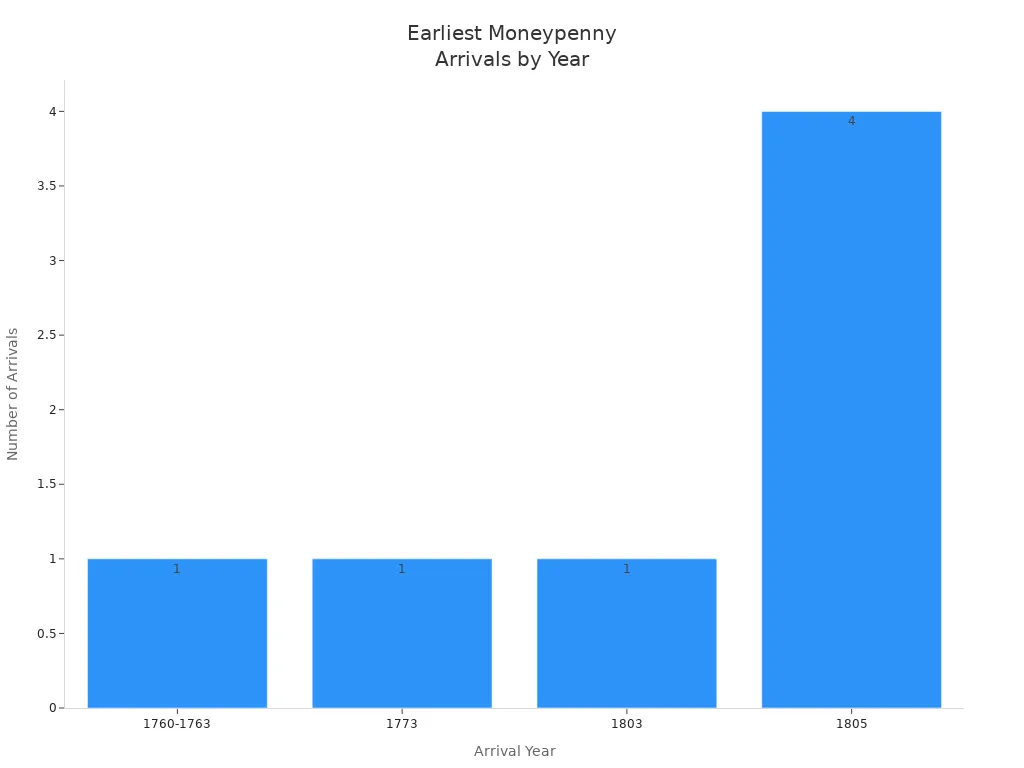
The moneypenny name also crossed the ocean. Many people with this name moved to America in the 1700s and 1800s. You can see some of the first arrivals in this chart:
The money penny meaning still brings families together today. You might find the moneypenny family crest or coat of arms in old papers. These symbols help you remember the long story behind your name.
Moneypenny Family History
Early Records and Documents
The moneypenny family history goes back to the 1200s. The first records show the family lived in Scotland. In 1211, Richard Monipennie got land called Pitmilly. This made the family important early on. In 1296, John de Monypenny signed the Ragman Rolls. This list showed nobles who promised to follow the English king. These records help us see how the family joined Scottish society.
| Year | Event | Description |
|---|---|---|
| 1211 | Charter Granted | Richard Monipennie received a charter for the lands of Pitmilly, Scotland. |
| 1296 | Ragman Rolls | John de Monypenny signed the Ragman Rolls, showing the family’s noble status. |
These old papers show the moneypenny name has a long history in Scotland.
Notable Individuals and Spelling Variations
You may see the surname spelled in different ways. People wrote it differently because spelling was not always the same. Some common spellings are:
- Monny’pennay
- Manypenny
- Monypenny
These changes happened because people spoke many languages. Writers spelled names how they sounded. You can find these spellings in old books and records.
Evolution Over Time
When you look at the moneypenny family history, you see the name changed and spread. The family started in Scotland and later moved to England and other places. Over time, the name showed up in many forms. Each family group added its own story. Today, people with this name live all over the world. The moneypenny family story shows how names can change but still link you to your past.
Moneypenny Distribution Today
Migration and Settlement Patterns
You can follow the moneypenny name across the world. Families first lived in Scotland and England. Later, many moved to other places. Some went to America in the 1700s and 1800s. Others made homes in Canada or Northern Ireland. Old ship lists show moneypenny families arriving in New York and Boston. Every move became part of their family story. Your ancestors may have moved for jobs, land, or adventure. Now, people with the moneypenny name live in many countries.
Current Prevalence and Statistics
You might ask where most moneypenny families live now. The biggest group is in the United States. Most live in Ohio, West Virginia, and California. Northern Ireland has the most moneypenny families by size. England and Canada also have many people with this name. Here is a list showing where you find the moneypenny name most:
- United States (985 people)
- Ohio (20%)
- West Virginia (14%)
- California (5%)
- Northern Ireland (highest concentration)
- England (9%)
- Canada (4%)
Tip: You can use local records or genealogy websites to learn more about your family. These tools help you find where your relatives lived and how the name spread.
The moneypenny name moved from country to country. Each place adds to the family story. The name keeps growing as families move to new areas. You may find new relatives or learn about your family history by looking at these patterns.
Moneypenny Family Symbols
Family Crest and Coat of Arms
You can learn about your family by looking at the moneypenny crest. This crest shows what your ancestors cared about. The moneypenny coat of arms has special symbols and colors. When you look at it, you may see these things:
- A fleur-de-lis is in the middle. It means purity and religious faith.
- There is a big tree. This shows your family is strong and has deep roots.
- The colors black and red are used. Black means staying true. Red stands for bravery and military power.
Scottish families used symbols like these to share their stories. Each part of the crest helps tell your family’s history.
Symbolism and Colors
Heraldry uses pictures and colors to send messages about families. You can see what the moneypenny crest symbols mean in this table:
| Symbol/Color | Meaning |
|---|---|
| Fleur-de-lis | Stands for purity, light, and religious faith. |
| Tree | Shows strong family roots and lasting strength. |
| Black (Sable) | Means staying true and never giving up. |
| Red (Gules) | Stands for courage and military power. |
These symbols help you know what was important to your ancestors. The moneypenny crest and coat of arms show the pride and values your family passed down.
You now know that the moneypenny name comes from England and Scotland. The family crest tells you what your ancestors cared about. Learning about your last name helps you know who you are.
- It shows where your name started and what it means.
- It tells how your family moved and changed over the years.
- It helps you learn about different ways people spelled moneypenny and their culture.
You can learn more by looking at websites like House of Names. You can share your own stories or things you find in the comments. Asking questions is the first step to learning about your family history.
FAQs
What does the name Moneypenny really mean?
You see the name Moneypenny and may think of money. The name started as a playful nickname. It does not mean you come from a rich family. It shows how people liked to use humor in names.
Where did the Moneypenny family first live?
You find the earliest Moneypenny families in Scotland and England. Records show the name in Scottish lands like Pitmilly as early as 1211. Over time, families moved to other countries.
Are there different ways to spell Moneypenny?
Yes! You might see these spellings in old records:
| Spelling | Example Use |
|---|---|
| Monypenny | Scotland, 1500s |
| Manypenny | America, 1800s |
| Monipenny | England, 1600s |
What does the Moneypenny family crest show?
The crest uses symbols like a fleur-de-lis and a tree. These stand for purity, faith, and strong family roots. The colors black and red mean loyalty and courage.
Can you find famous people with the Moneypenny name?
You can find some. For example, John de Monypenny signed the Ragman Rolls in 1296. Today, the name is also famous in books and movies, like Miss Moneypenny in James Bond stories.

Sound clearer on your next call
Utell AI converts your accent and cleans up background noise in real time.


