



Home›Blog›Does Accent Conversion Preserve Names, Numbers and Prices?
WorkplaceDoes Accent Conversion Preserve Names, Numbers and Prices?
Contents

If you take orders, book appointments, or quote prices on calls, one question matters more than how natural your voice sounds: will the caller hear the same name, number, and price you actually said? A single slip, such as "fifteen" heard as "fifty" or "Siobhan" heard as "Shivon," can cost a refund, a missed booking, or a customer's trust. This guide explains how real-time accent conversion treats these details, where errors can still creep in, and the simple habits that keep every call accurate.
The Short Answer
Real-time accent conversion is designed to change how your words sound, not which words you say. It does not rewrite your sentence, translate it, or swap one figure for another on purpose. In normal conditions, names, numbers, and prices come through with the same content you spoke.
That said, no speech system is perfect. The engine has to recognize each sound before it can reproduce it in a new accent, and rare names, fast digit strings, and noisy rooms are where recognition is weakest. The practical goal is not blind trust but a short test plus a confirmation habit, which together close almost every gap.
How Real-Time Accent Conversion Handles Words
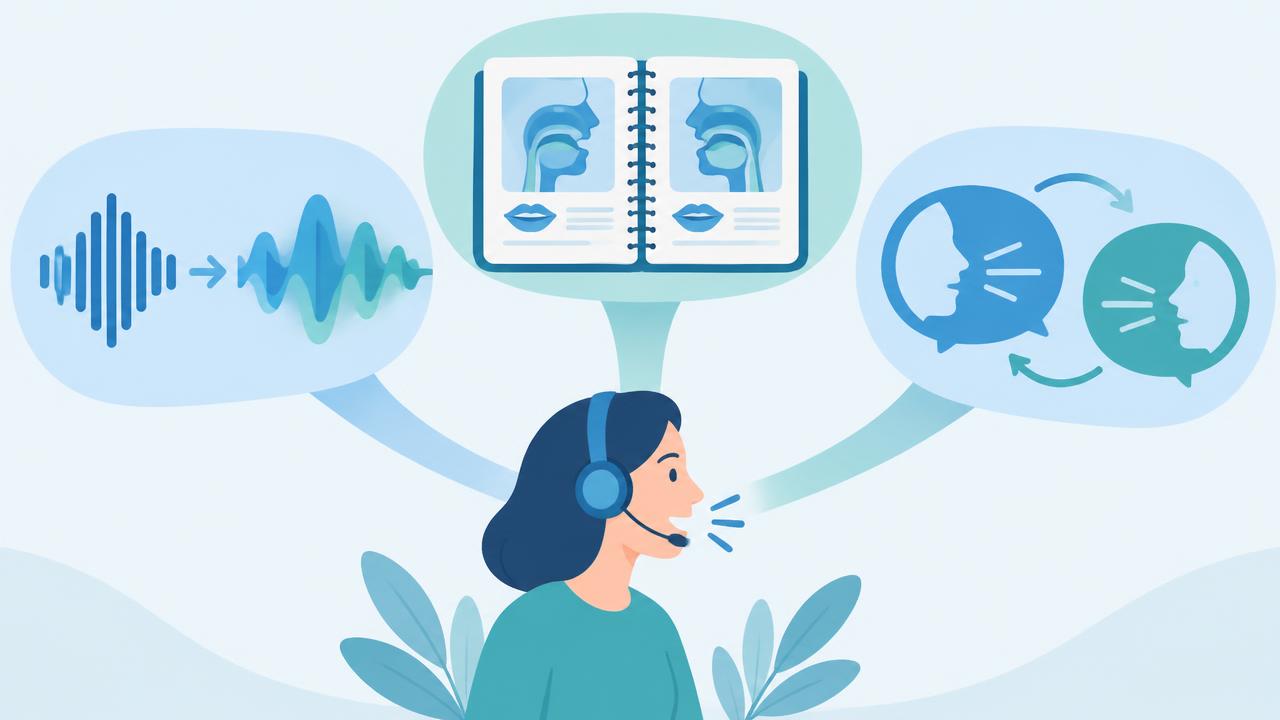
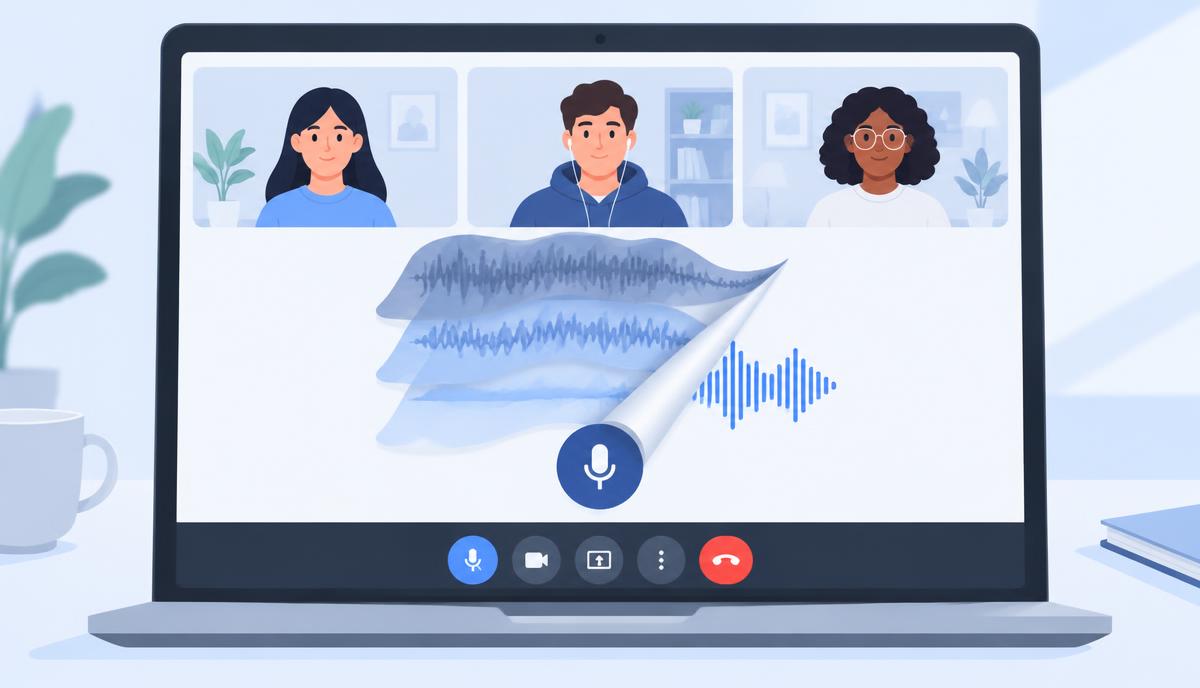
Most accent conversion tools follow a similar pipeline. Your microphone audio is analyzed in small slices, the speech sounds are identified, and those sounds are reproduced with a different accent profile while your timing and intonation are kept as close as possible. The output then goes to Zoom, Teams, Meet, or your softphone as if it came from a normal microphone.
This differs from live translation, which deliberately converts meaning into another language and can paraphrase. If you are still choosing between approaches, our comparison of accent conversion, accent training, and live translation breaks down what each one is built to do.
What stays the same
- The order of your words and the content of each sentence.
- Your pauses, which matter when you read out long numbers in groups.
- Your emphasis on a key word, such as stressing the price.
What changes
- Vowel quality, rhythm, and certain consonants, so speech matches the target accent.
- Background noise, which is reduced when noise cancellation is also on.
Where Names, Numbers and Prices Can Slip
Errors rarely come from the conversion "deciding" to change a word. They come from sounds that are hard to recognize in the first place. The table below lists the details agents worry about most and why each one is at risk.
| Detail type | Example | Why it can slip | Risk level |
|---|---|---|---|
| Uncommon personal names | Siobhan, Nguyen, Oluwaseun | Spelling does not match sound; few training examples | High |
| Teen vs. tens numbers | 15 vs. 50, 13 vs. 30 | Difference rests on stress and one final sound | High |
| Long digit strings | Order 4471-0938 | Fast delivery blurs boundaries between digits | Medium |
| Prices with cents | $19.90 vs. $90.19 | Word order and "point" are easy to rush | Medium |
| Email addresses | m.ortiz@... | Letters like B/D/P/V and M/N sound alike | High |
| Dates | the 3rd vs. the 23rd | Short words dropped at speed | Medium |
| Brand and street names | Worcester Road | Local pronunciation differs from spelling | Medium |
Notice that most of these are also the items human listeners mishear without any software involved. Teen and tens numbers are a classic example: native speakers confuse them over phone lines too, which is why airlines and banks spell figures out digit by digit.
Why Some Details Are Harder Than Others
Stress carries the meaning
"Fifteen" and "fifty" differ mainly in which syllable is stressed and whether the word ends in an "n." If your natural accent puts equal weight on both syllables, the recognizer gets a weaker cue. Our list of accent test words shows other pairs where small sound shifts change the word entirely.
Names have no context
For ordinary words, the surrounding sentence helps the system choose the right sound. A surname offers no such help. "Please hold, Ms. Kaur" gives the engine nothing to predict "Kaur" from, so it relies on the raw audio alone.
Speed and noise stack up
Reading a card number at full speed in a busy room combines the two conditions that hurt recognition most. Slowing down slightly and grouping digits gives both the software and the listener clearer boundaries. A headset microphone close to your mouth helps more than any setting change.
A 10-Minute Pre-Call Test
Before relying on accent conversion for live customers, run this quick check with your own vocabulary. It turns a vague worry into evidence you can act on.
- Write a test list. Include 10 customer names you see often, 5 order or account numbers, 5 prices, 3 dates, and 2 email addresses from your real workload (use made-up but realistic values).
- Record with conversion on. Use your normal headset and the meeting or call app you actually use, then record the session.
- Read at work speed. Do not slow down artificially; you want to test real conditions.
- Play it back to a colleague. Ask them to write down what they hear without seeing the list.
- Compare line by line. Mark every mismatch and note whether it came from the item type, your speed, or noise.
- Repeat the misses. Re-read only the failed items slower or in groups, and see whether the error disappears.
Most people find that errors cluster in one or two categories, often teen numbers or unusual names. That tells you exactly where to apply the confirmation habits below instead of slowing down every sentence.
Confirmation Scripts That Protect Every Call
Contact centers have used read-back techniques for decades because phone audio is lossy even between two native speakers. They work the same way with accent conversion turned on.
Read numbers in groups and digit by digit
"Your order number is four-four-seven-one, zero-nine-three-eight. Could you read that back to me?"
Split teen numbers
"That's fifteen, one-five, dollars."
Spell names with a word for each letter
"Let me confirm the spelling: K as in kilo, A as in alpha, U as in uniform, R as in romeo."
Say prices in two parts
"The total is nineteen dollars and ninety cents."
These scripts add a few seconds per call but remove the most expensive class of mistakes. Many teams already require them for payments; extending them to names and dates costs little. For broader tips on clear support speech, see how neutral English improves customer support communication.
Accent Conversion vs Other Safeguards
Accent conversion is one layer of protection, not the only one. Other safeguards have real strengths worth using alongside it.
- Written follow-up: Sending an SMS or email summary with the order number and total gives the customer something to check, and no audio tool can match that certainty.
- Live captions: Captions in Zoom, Teams, or Meet let both sides see what was recognized, which catches errors in real time during internal meetings.
- CRM auto-fill: Pulling account numbers from the system instead of reading them aloud removes the spoken step entirely.
- Human QA review: Supervisors sampling recordings find patterns that individual agents miss.
Where accent conversion helps most is the rest of the conversation: explanations, troubleshooting, and small talk, where customers simply need to understand you without straining. Utell AI focuses on that job, converting your accent and reducing background noise in real time while keeping your words as spoken (as of October 2026). It does not replace confirmation habits, and it does not teach you English; it changes how your voice reaches the listener.
If you want to run the pre-call test above with your own words, you can try Utell AI free and compare recordings with conversion on and off.
FAQ
Can accent conversion change a number I say into a different number?
It is not designed to substitute content, so it will not intentionally turn 40 into 14. A mismatch can only happen if the original sound was unclear enough to be recognized wrongly, which is most likely with teen and tens pairs. Saying figures digit by digit and asking for a read-back removes that risk on calls where accuracy matters.
Will my own name sound different with accent conversion on?
Your name will be pronounced with the target accent's sound patterns, much as a colleague from another region might say it. The identity of the name stays the same. If you prefer a specific pronunciation, introduce yourself once and spell it, then test a recording to hear how it comes across before an important meeting.
Is accent conversion safe to use when taking card payments?
It can be used during payment calls, but follow your company's compliance rules first. Many organizations require secure payment lines or keypad entry, so card numbers are never spoken at all. Where spoken entry is allowed, use grouped digits and full read-backs, and keep a written receipt as the final check for both sides.
Does a slower speaking pace improve accuracy?
Slightly slower delivery for critical details helps, but you do not need to slow every sentence. Pausing between digit groups and stressing the key syllable in numbers gives the clearest benefit. Keep normal speed for general conversation so you still sound natural, and save the careful pace for names, prices, and codes.

Sound clearer on your next call
Utell AI converts your accent and cleans up background noise in real time.


