




Home›Blog›Best 5 Ways to Sound American: Which One Fits You
Pronunciation SkillsBest 5 Ways to Sound American: Which One Fits You
Contents
"Sounding American" is rarely about identity. For most people it means one practical thing: a listener in Ohio or Texas should understand your first sentence without asking you to repeat it. That goal can be reached in more than one way, and the methods differ enormously in how long they take, what they cost, and where the result actually shows up.
This guide compares the five approaches that work, ranks them by the situation you are in, and is honest about the trade-off nobody likes to say out loud: training changes your voice everywhere but takes months, while software changes it instantly but only where the audio passes through your computer.
What "sounding American" actually means
General American is the broadly regionless accent used in US broadcasting. Three features carry most of the perceived "Americanness":
- Rhotic R. The r in car, work, and better is pronounced, not dropped.
- Flapped T. Between vowels, t becomes a quick d-like tap: water, city, later.
- Stress-timed rhythm. Content words get length and pitch; function words get squeezed. Syllable-timed speakers sound "even," which listeners read as foreign long before they notice any single sound.
Note the order. Vowel-by-vowel perfection matters less than rhythm and stress. If you only have limited practice time, rhythm gives the largest perceived change per hour spent.
Comprehension is not the same as accent. Listeners judge speech partly on how easy it is to process, so predictable rhythm and clean consonant endings improve how confident and credible you sound even when vowels stay non-native.
The 5 ways, compared
| Method | Time to noticeable change | Typical cost | Works where | Permanent? |
|---|---|---|---|---|
| 1. Self-directed drills | 3-6 months, 20-30 min/day | Free to low | Everywhere | Yes |
| 2. Accent coaching | 2-4 months of weekly sessions | Highest of the five | Everywhere | Yes |
| 3. Shadowing US media | 2-4 months, daily | Free | Everywhere | Yes |
| 4. Script and delivery control | Same week | Free | Prepared speech only | Partial |
| 5. Real-time accent conversion | Same call | Subscription | Online calls and streams | No, tool-dependent |
The table is the whole argument in miniature: methods 1-3 change you and take a season; methods 4-5 change the call and take a day. Most people who solve this well end up running one slow method and one fast method at the same time.
1. Self-directed drills
Pick three targets, not thirty. A workable set for most non-native speakers: rhotic R, flapped T, and final consonants (asked, helped, months). Record 60 seconds of yourself reading the same paragraph every Monday and keep the files. Progress on accent is slow enough that memory lies about it; recordings do not.
Drills cost nothing and transfer to every situation, including the offline ones software cannot touch: a job interview in a room, a doctor's appointment, ordering coffee. Their weakness is compliance. Without a coach or a deadline most people stop at week three.
2. Accent coaching
A trained coach hears what you cannot: the substitution you make in unstressed syllables, the vowel you merge, the sentence melody that resets on every word. That diagnostic value is the reason coaching still outperforms an app for long-term change. Group classes cost less and give you listeners to practice on; one-on-one moves faster.
Before booking, check the money side against the market, because prices vary more than quality does. Our breakdown of what accent reduction classes typically cost and the comparison of online accent reduction programs are useful starting points.
3. Shadowing American media
Shadowing means speaking along with a recording, about half a second behind, copying rhythm and pitch rather than words. Ten minutes a day with a US podcast or sitcom beats an hour of isolated vowel repetition, because you are practising the timing layer that listeners react to first.
Pick material where speech is fast and casual. News anchors are over-articulated; ordinary conversation contains the reductions (gonna, kinda, whaddya) that make speech sound native. If you want a longer drill list, our guide to ten ways to perfect your American accent goes deeper on the exercise side.
4. Script and delivery control
This is the underrated one. You can raise comprehension in a single afternoon without touching your accent:
- Slow the first sentence by roughly 20 percent. Listeners need a few seconds to tune into any unfamiliar voice.
- Front-load the key noun: "Your refund is approved" beats "So what I can do here is, I think, approve the refund."
- Replace words you personally trip on. If rural or specifically derail you, say outside the city and in particular.
- Fix the microphone. A cheap headset mic 5 cm from your mouth removes more confusion than a month of vowel drills, because clipped consonants are often a hardware problem, not an accent problem.
The limit is obvious: it only helps in speech you can plan or slow down, and it does nothing for a fast, argumentative meeting.
5. Real-time accent conversion
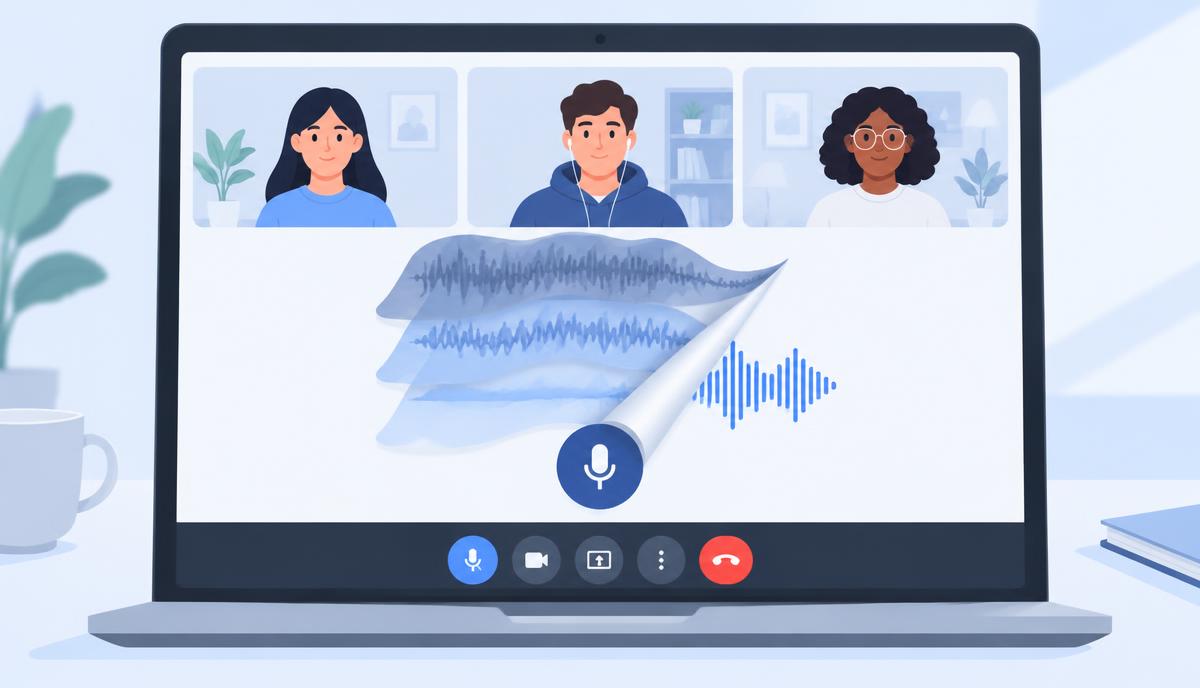
Software such as Utell AI sits between your microphone and the app you are calling from, and converts your speech into a clearer American-sounding voice as you talk, while noise cancellation removes room sound. You keep your own words, pacing, and meaning; what changes is the accent profile the listener receives.
What that solves is coverage, not learning. If 90 percent of your English happens on Zoom, Google Meet, Teams, or a stream, a tool that works on those calls addresses most of your real exposure from day one, and it works on your worst days too, when you are tired and pronunciation slips. As of August 2026 Utell AI runs as a virtual microphone selected inside the meeting app, so setup is a device choice rather than a workflow change.
What it does not do is replace study. Turn it off and your unaided speech is what it was. It is also useless offline: a face-to-face interview passes no audio through your computer. Treat it as coverage for online rooms while training does the slow work everywhere else.
Try real-time accent conversion on your next call and compare a recording of the same script with the tool on and off.
Which one should you pick?
- You have 6+ months and want change that lasts: shadowing plus drills, with coaching if budget allows.
- You have a client call on Thursday: script and delivery control now, real-time conversion for the call itself.
- Your job is remote support, sales, or teaching: real-time conversion covers the paid hours; 15 minutes of daily shadowing covers everything else.
- You are preparing for in-person interviews or exams: coaching, because no software follows you into the room.
A realistic combined plan: 15 minutes of shadowing each morning, one recorded self-check per week, delivery rules applied to every call, and conversion switched on for meetings where being misunderstood costs money. More approaches in our pronunciation skills articles.
How to measure progress honestly
Accent work fails quietly because people track effort instead of outcome. Track these three instead, weekly:
- Repeat rate. How many times per call someone asks "sorry, what?" Count it. It should fall before anything else improves.
- Recording check. Same 60-second paragraph, same time each week. Listen to week 1 against week 6, never week 5 against week 6.
- Auto-caption accuracy. Turn on live captions in your meeting app and read a fixed script. Word error rate is a rough but free proxy for intelligibility, and it moves in the same direction as human comprehension.
Run those three for eight weeks and you will know which of the five methods is actually paying for itself in your situation.
FAQ
Can an adult really learn to sound American?
Most adults can reach comfortable intelligibility and a noticeably more American rhythm within a few months of daily practice. Reaching a level where native listeners hear no trace of a first language is rare after childhood, and it is not required for the outcomes people usually want: being understood, sounding confident, and not repeating yourself.
How long does accent training take?
Expect three to six months of 20-30 minutes a day for a change other people comment on, and longer for it to hold under stress. Progress is not linear; rhythm and stress improve first, individual vowels last. Weekly recordings are the only reliable way to see movement over that timescale.
Is real-time accent conversion cheating?
It is closer to a microphone upgrade than to a disguise. Your words, answers, and intent are yours; the tool adjusts how the audio sounds to the listener. Many people use it while training, then rely on it less. It is worth telling colleagues you use audio processing if your workplace has rules about recorded calls.
Do noise cancellation tools improve my accent?
No. Tools like Krisp remove background noise, which helps comprehension when your room is loud, but they leave your pronunciation untouched. If people understand you fine in a quiet room and struggle in a busy one, noise cancellation is the right fix. If they struggle in both, you need training, accent conversion, or both.
Should I lose my accent completely?
There is no need to. Clarity and accent are different variables: plenty of people with a strong first-language accent are perfectly easy to understand because their rhythm and consonant endings are clean. Target comprehension first and treat any additional Americanness as optional.

Sound clearer on your next call
Utell AI converts your accent and cleans up background noise in real time.


