





Home›Blog›How Many Companies Hire Indian Freelancers?
WorkplaceHow Many Companies Hire Indian Freelancers?
Contents

How many companies hire Indian freelancers? No single registry counts them, so the honest answer is an estimate built from public data: India's freelance workforce is commonly estimated at 15 to 20 million people, and roughly 4 to 5 million of them work for clients outside India, mostly in the United States, the United Kingdom, Australia, and Canada. If the average active client relationship involves two to four Indian freelancers, the number of foreign companies currently hiring Indian freelancers lands somewhere between one and two million. That is a market, not a niche.
This article breaks down where that demand sits, which industries drive it, and what happens at the exact moment a written proposal turns into a voice call. Because for this talent pool, the hiring decision often hinges less on skill than on how clearly a client can understand the person on the other end of the call.
How many companies actually hire Indian freelancers
Start with what is verifiable. Payoneer's freelancer surveys and India's own economic reporting place the country's gig and freelance workforce in the tens of millions, with estimates between 15 and 20 million as of 2025. Payoneer's Freelancer Insights Report has repeatedly ranked India among the top three countries by freelance earnings growth.
The Upwork Research Institute reports that a growing share of US businesses now work with independent professionals, and India is consistently the largest non-US talent pool on that platform. Combining platform data with direct-contract relationships, a defensible estimate looks like this:
| Metric | Estimate | Basis |
|---|---|---|
| Total Indian freelancers | 15–20 million | Payoneer / industry surveys, as of 2025 |
| Serving foreign clients | 4–5 million | Platform earnings + export services data |
| Largest client countries | US, UK, Australia, Canada | Platform geography reports |
| Foreign companies hiring Indian freelancers | 1–2 million | Derived: 2–4 freelancers per active client |
| Fastest-growing verticals | Software, design, content, support | Upwork and Fiverr category data |
The derivation matters more than the headline. Nobody publishes an official count, so any article claiming a single precise number is inventing it. What the data supports is the range, and the range is large enough that the hiring mechanics deserve scrutiny.
Where the demand comes from
Demand is not evenly spread. It clusters in work that is deliverable-based, reviewable, and timezone-tolerant. Software development and IT services take the largest share, followed by design, digital marketing, writing and content, virtual assistance, and customer support.
Geographically, the pattern mirrors language. American companies account for the largest share of foreign clients, with the UK, Australia, and Canada behind them. English proficiency is the bridge for all of it, which is why India outperforms larger labor pools where English is less widespread.
Two structural trends keep pushing the number up. Remote work normalized distributed teams after 2020, and rising contractor costs in Western markets keep pushing budget-conscious firms toward offshore talent. A US startup that once hired one local developer now routinely hires three Indian freelancers for the same budget.
Why accent shows up in the hiring funnel
Most clients never say the word "accent" in a rejection email. The filter operates silently, at the stage where communication switches from text to voice. A freelancer with a flawless portfolio can lose the contract in a fifteen-minute discovery call.
Here is where the friction concentrates, step by step:
| Funnel stage | What the client hears | What happens when clarity breaks |
|---|---|---|
| Written proposal | Nothing yet; grammar only | Minimal; text hides accent entirely |
| Discovery call | Accent, rhythm, speed | Client asks for repetition; trust dips |
| Technical interview | Explanation under pressure | Filler words + fast speech read as uncertainty |
| Weekly standups | Consistency over time | Client stops assigning voice-heavy tasks |
| Renewal decision | Total communication cost | Quiet non-renewal; no feedback given |
Laboratory research supports the pattern. Studies on processing fluency, including work by Shiri Lev-Ari and Boaz Keysar at the University of Chicago, found that listeners rate statements spoken with a heavy accent as less credible than identical statements spoken with a native accent, even when they consciously reject accent bias. The judgment happens below awareness.
The commercial consequence is measurable. Freelancers report that clients who struggle on calls drift toward asynchronous, text-only working relationships, then replace them with a local hire at renewal time. The freelancer never hears a complaint about accent; they just stop hearing from the client. For a deeper look at how these dynamics play out inside call-heavy roles, see our analysis of what AI means for Indian call center agents.
What clients actually judge: clarity vs accent vs English level
Clients conflate three separate things, and freelancers who misdiagnose the problem train the wrong skill:
| Mistaken belief | What the client actually hears | The fix |
|---|---|---|
| "My English is the problem" | Fluent grammar, but syllable timing strains parsing | Rhythm and stress work, not vocabulary |
| "I should sound American" | Any clearly-paced accent is fine | Slow down 10–15%, add pauses, keep the accent |
| "Faster sounds more fluent" | Speed + unfamiliar stress = decoding load | Chunk sentences; pause at clause boundaries |
| "A better microphone fixes it" | Clear audio of unclear speech | Audio quality and speech clarity are separate |
| "Clients who reject accents are biased, full stop" | Fatigue on repeat listening is real | Reduce decoding effort for both sides |
The useful frame is decoding cost. Every extra unit of effort a client spends parsing your speech is effort not spent on your ideas. Indian professionals working inside American companies face the same dynamic in meetings, which we covered in our guide on speaking clearly in American workplaces. Freelancers face it harder, because there is no HR department or long-term relationship to absorb early friction. The first call is the audition.
What freelancers try today
The market offers five broad responses, each with a different cost profile:
| Approach | Time to results | Cost | Where it works best |
|---|---|---|---|
| Accent coaching | 3–12 months | $50–150 per session | Long-term, permanent change |
| Shadowing practice | 6+ months of daily work | Free | Self-directed learners |
| Text-only positioning | Immediate | Free | Avoids calls but caps earnings |
| Noise suppression (e.g. Krisp) | Same day | Free–$8/mo | Noisy rooms; does not change accent |
| Real-time accent conversion | Same day | Varies by tool | Live calls where clarity is the blocker |
Each row deserves a fair reading. Coaching works and produces durable change, but few freelancers can wait six months for a contract they need this month. Shadowing is free and genuinely effective over time. Krisp is legitimately excellent at what it does: removing background noise. It just solves a different problem, because a clean audio channel of heavily accented speech still asks the client to do the decoding work.
Text-only positioning is the quiet giant in this table. A large share of Indian freelancers simply never take calls, choosing email and chat scopes even when the client would pay more for voice availability. It protects them from the accent filter and simultaneously caps their rates, since voice-capable freelancers command a premium in sales-adjacent and consulting work.
Where Utell AI fits — and where it doesn't
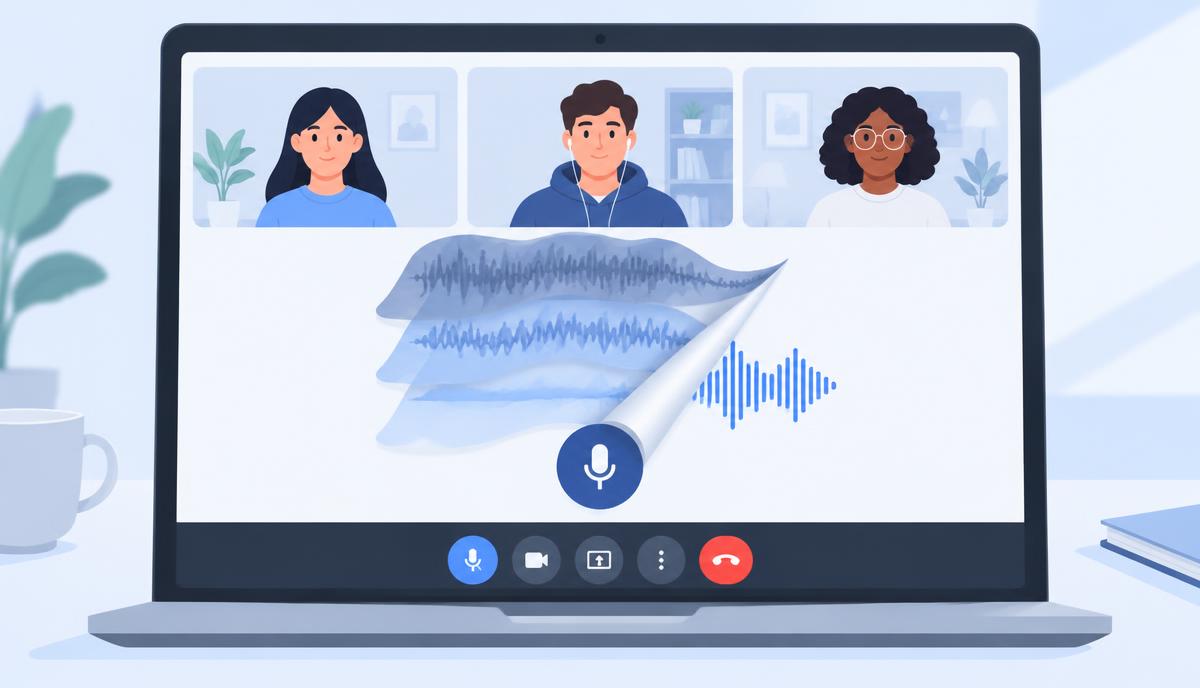
Utell AI is a real-time voice layer. As of August 2026, it converts your accent into a clearer standard American or British sound while you speak, and suppresses background noise in the same pass. For a freelancer whose written work already wins proposals but loses discovery calls, it closes the gap on the same day it is installed.
It also respects a real boundary. Utell AI does not improve your English, your portfolio, or your negotiation skills. If the blocker is grammar or domain knowledge, no voice tool fixes that. And it works on live speech, so it cannot clean up pre-recorded video.
The practical pairing most freelancers land on: shadowing and coaching for the long term, real-time conversion for the calls that pay the bills now. We walk through the call-by-call setup in Accent Changer for Freelancers.
Try Utell AI on your next client call — free to start, and it takes minutes to set up.
FAQ
How many Indian freelancers work for US companies?
No official registry exists, but combining platform data and services-export figures, an estimated 4 to 5 million Indian freelancers serve foreign clients, with the United States as the largest single market. Assuming multiple freelancers per client, the number of US companies hiring Indian freelancers plausibly sits in the high hundreds of thousands.
Do clients actually reject freelancers because of accent?
Rarely explicitly. Research on processing fluency shows listeners unconsciously rate accented speech as less credible, and in practice the filter shows up as lost discovery calls and quiet non-renewals rather than stated feedback. Freelancers typically never learn the real reason, which is what makes the pattern hard to fix.
Is improving my English enough to win more foreign clients?
Usually not, because English level and accent clarity are separate variables. Many Indian freelancers write flawless English and still struggle on calls because syllable-timed rhythm and retroflex consonants raise the listener's decoding effort. Clients judge how easily they can understand you in real time, not your grammar score.
Does noise cancellation software like Krisp change your accent?
No. Krisp and similar tools remove background noise from your microphone, and they do that job well. Your accent passes through unchanged. If the client's difficulty is parsing your pronunciation rather than hearing you over a fan, noise cancellation alone does not address it. Accent conversion is a separate layer.
What is the fastest way to sound clearer on client calls?
The same-day option is real-time accent conversion software, which reshapes your speech as you talk. Slower options include deliberate pausing, reducing speed by 10 to 15 percent, and shadowing native speakers daily, all of which help within weeks. Coaching produces the deepest change but takes months of regular sessions.

Sound clearer on your next call
Utell AI converts your accent and cleans up background noise in real time.


